When my husband was recently asked what he believes is the single most important trait of a leader, he did what any wise man would do—he asked me (haha, I kid).
He did ask me after the fact, to see what I would say, and it caught me off guard. Because that question feels a lot like asking, Which key on a piano is the most important? Which note matters most in a symphony?
None of them. And all of them.
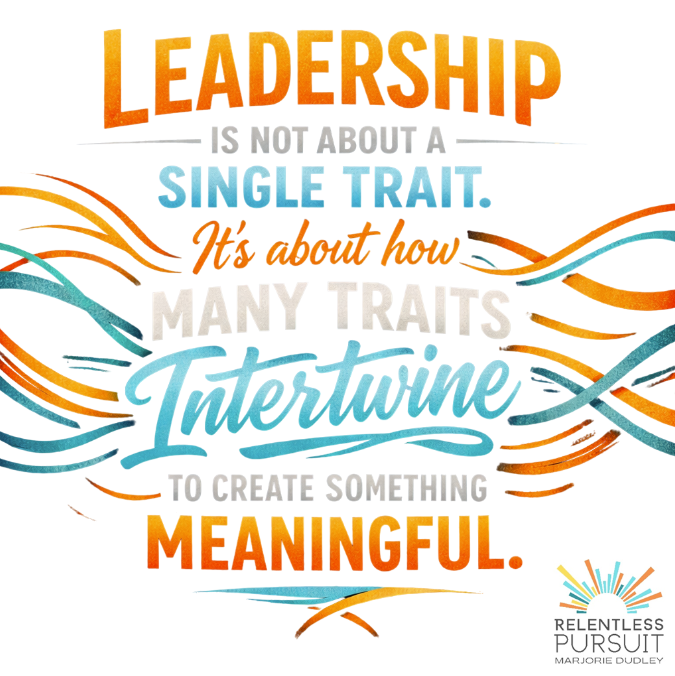
Leadership is not about a single trait. It’s about how many traits intertwine to create something meaningful. Powerful. Productive. Sometimes even beautiful.
If you press only one key on a piano over and over again, you don’t get music. You get noise. Leadership works the same way. You can’t rely solely on charisma. Or vision. Or accountability. Or empathy. It’s the integration of these qualities that creates harmony inside an organization.
A strong leader leads by example. That part is foundational. People are always watching. They may not follow what you say, but they will absolutely follow what you model. If you expect discipline, show discipline. If you expect ownership, demonstrate ownership. Culture mirrors the standard you tolerate and the behaviors you embody.
At the same time, leadership requires clarity. Clarity of vision. Clarity of expectations. Clarity of direction. Without clarity, even the most talented teams drift. A compelling vision pulls people forward; clear expectations anchor them in the present. When both are present, momentum builds.
But clarity alone isn’t enough.
You must also communicate candidly and kindly. That balance is an art. Too soft, and standards erode. Too harsh, and trust fractures. Great leaders say the hard things in a way that preserves dignity. They hold people accountable without micromanaging them. They understand that hovering creates dependence, while trust creates growth.
And here’s where it gets nuanced: you meet people where they are, but you refuse to leave them there.
Leadership requires the emotional intelligence to recognize someone’s current capacity and the courage to challenge them toward their potential. You stretch without snapping. You coach without controlling. You support without rescuing.
Another paradox? You must accept that sometimes people will not do things the way you would do them.
And that’s okay.
Leadership is not cloning. It’s cultivating. If the outcome aligns with the standard and the values of the organization, the path doesn’t have to look identical to yours. When leaders demand replication instead of results, innovation suffocates.
You also have to listen. Truly listen. The best leaders are not the loudest voices in the room—they are often the most attentive. They create space for ideas, perspectives, and dissent. They understand that wisdom is rarely centralized.
But let’s be clear about something.
Leadership is not consensus.
You gather input. You consider perspectives. You weigh options. But eventually, someone must decide. And that someone is you. Indecision disguised as collaboration is still indecision. Leadership requires movement. It requires conviction. It requires the willingness to move forward even when not everyone agrees.
So what is the single most important trait of a leader?
It’s not a single note.
It’s the ability to orchestrate the notes—vision, clarity, accountability, empathy, decisiveness, humility—into something cohesive.
Leadership is harmony, not hierarchy. It’s tension balanced with trust. It’s direction paired with development.
And when done well, it sounds less like noise… and more like music.
Stay Relentless.

Leave a comment