I stopped praying for my problems to get smaller and started praying—and planning—for myself to get stronger.
That shift didn’t come from a mountaintop moment. It came after a long stretch of months that were hard personally and professionally. The kind of season where you keep asking “God, when is this going to get easier?”
Around that time, I was reading The Slight Edge by Jeff Olson, and one idea hit me like a ton of bricks:
It’s not supposed to be easy.
That sentence changed how I look at resilience forever.

The Lie We’re Tempted to Believe
We admire people who accomplish extraordinary things. We study them. Quote them. Share their stories.
But what we quietly wish—if we’re honest—is that their results came with less resistance.
They didn’t.
- Thomas Edison tested hundreds of ideas that didn’t work before the light bulb did.
- J.K. Rowling was struggling financially, writing in cafes, and facing rejection after rejection before Harry Potter ever found a publisher.
- Sara Blakely cold-called department store buyers one by one, getting “no” far more often than “yes,” before SPANX became a household name.
These people didn’t succeed because it was easy.
They succeeded because they persisted.
They dreamed.
They persevered.
They slogged forward.
They pivoted.
They tried again. And again. And again.
That’s what legends do.
Easy Doesn’t Create Success
Here’s the uncomfortable truth:
Easy creates mediocrity.
Mediocrity creates the slow death of the human spirit.
And yet, we crave easy.
We crave comfort.
We crave the path of least resistance.
We crave the version of success that doesn’t demand much of us.
But comfort never satisfies.
I’ve realized that one of the greatest challenges most of us face isn’t failure—it’s the status quo. There’s a strange safety in staying where you are, even when you know you’re capable of more.
But staying comfortable doesn’t build resilience. It erodes it.
The Science Behind Grit (And Why This Matters)
Neuroscience backs this up.
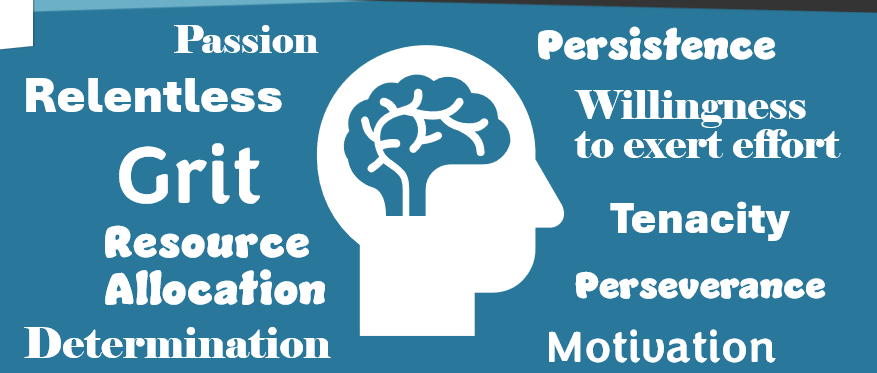
There’s a part of the brain called the mid-cingulate cortex, which plays a key role in grit, perseverance, and resilience—especially when things are hard. This region strengthens when you choose to persist through difficulty.
And here’s the kicker:
If you don’t use it, you lose it.
Just like a muscle, resilience atrophies when life is engineered to be frictionless. Avoiding discomfort doesn’t protect you—it weakens your capacity to endure, adapt, and grow.
On the flip side, every time you stay in the fight a little longer than you want to, you’re training that part of your brain. You’re becoming someone who can handle more.
A Better Question to Ask
Instead of asking: “When will this get easier?”
Try asking: “Who am I becoming because this is hard?”
Difficulty isn’t a detour.
It’s the training ground.
Resilience isn’t something you’re born with—it’s something you build. And it’s built one hard choice, one disciplined action, one moment of persistence at a time.
If you want a life that’s bigger than comfort, you have to be willing to become stronger than the challenge.
Stay relentless.

Leave a comment